Navigating Undocumented Restaurant Labor
For decades, the American restaurant industry has functioned as a primary entry point for the nation’s workforce. From family-owned bistros to national franchises, the heartbeat of the “back of the house” (BOH) is often sustained by an immigrant labor force. However, as federal oversight tightens and the labor market shifts, restaurant owners face an increasingly complex ethical, legal, and operational challenge: the hiring of undocumented staff, particularly as they move into guest-facing roles.
The Operational Reality: Why the Practice Persists
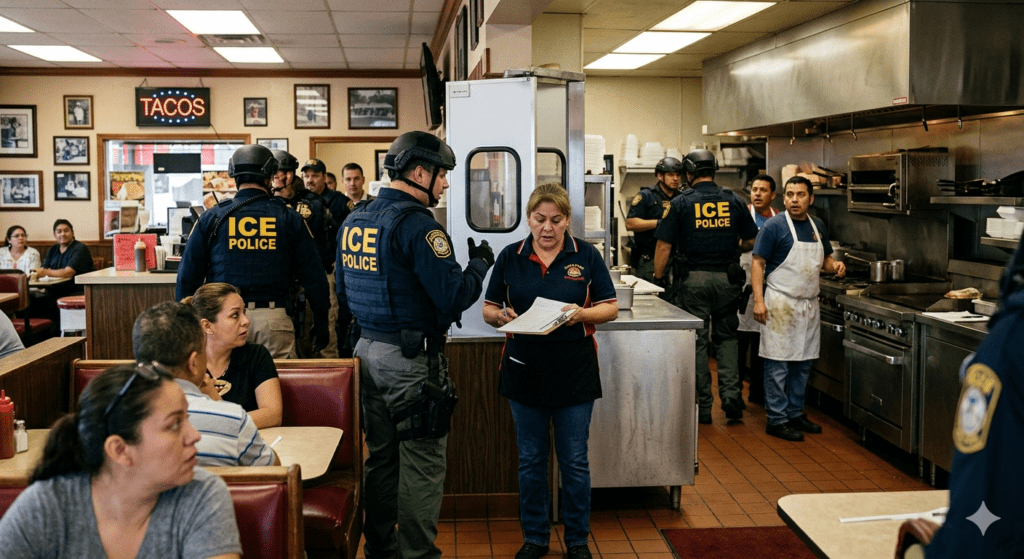
The primary driver for hiring undocumented workers is often a matter of survival. The industry is currently grappling with a historic labor shortage. For many restaurant operators, undocumented individuals are the only applicants willing to take on the grueling, entry-level positions; dishwashing, prep work, and line cooking that form the foundation of any successful service.
Increasingly, these workers are also filling roles in the Front of the House (FOH) as bussers, runners, and servers. These employees often bring a level of reliability and dedication that is increasingly hard to find. For an owner in a high-volume environment, a staff member who is consistently present and willing to work demanding hours is an invaluable asset.
The Front of the House Challenge: Language and Logistics
Hiring undocumented staff for guest-facing positions introduces a unique set of pros and cons specifically related to the “theatre” of dining:
- The Language Barrier: A primary “con” in the FOH is the potential for communication breakdowns. If a server or bartender cannot clearly explain ingredients or menu items to a guest with a severe allergy, the restaurant faces massive liability. If a server or bartender is not fluent with English, interaction with English speaking guests can be a massive problem for the kitchen and the overall dining experience for the guest.
- In many markets, having multilingual staff is a significant benefit for the restaurant and the guest. Bilingual employees can cater to a broader demographic of customers, making international tourists or local immigrant communities feel more at home.
- Cultural Nuance and Service Pace: Many undocumented workers come from cultures with a high emphasis on hospitality and “sense of urgency.” This often translates to a FOH team that is exceptionally attentive and fast. However, the “con” lies in the training gap; understanding the specific American “tipping culture” or the nuances of high-end wine service may require a more significant investment in training than a domestic hire might.
The Risk May Not Be Worth The Reward!
While the operational benefits are immediate, the risks are potentially catastrophic. Under the Immigration Reform and Control Act (IRCA), employers are legally required to verify the identity and employment eligibility of all staff via Form I-9.
The Risks Of Non-Compliance Include:

- Civil and Criminal Penalties: Fines for hiring unauthorized workers can range from a few hundred to several thousand dollars per individual. Patterns of “knowingly hiring” can lead to criminal charges for owners.
- Audit Vulnerability: Immigration and Customs Enforcement (ICE) “silent audits” of I-9 forms have become more frequent. A single administrative error can trigger a deep-dive investigation that disrupts daily operations.
- Reputational Damage: In an era of instant social media, news of a workplace raid can alienate a loyal customer base and damage the brand’s standing in the community.
- Dramatic Results: Restaurants are prime targets of government authorities enforcement raids. Should this happen, an owner will not only be subject to a host of penalties, but the loss of 1 to all undocumented employees that will crimple the restaurant operations. Moreover, the restaurant can be shut down for an indefinite period of time while civil and criminal actions are brought against the restaurant’s owners and managers. Some restaurants do not survive and are forced to close and/or file bankruptcy.
The Ethical and Cultural Weight
There is also an internal cultural cost to consider. Relying on an undocumented workforce can create a “two-tier” system. These employees often lack access to the same legal protections and/or benefits as their documented peers. This power imbalance can lead to an environment ripe for exploitation—or the perception of it—which harm the workplace morale.

On the flip side, many owners feel a deep moral obligation to the individuals who have helped build their businesses. In many cases, these workers have been with a restaurant for years, becoming “work family.” Terminating a loyal employee solely due to a change in documentation status is a gut-wrenching decision that many operators find nearly impossible to make.
Finding the Middle Ground
The path forward for a savvy operator is one of strict compliance and proactive management. Utilizing tools like E-Verify can provide a layer of protection, though it is not a “get out of jail free” card. Investing in comprehensive I-9 audits by a third-party legal professional is no longer a luxury—it is a business necessity.
Ultimately, the restaurant industry remains a significant advocate for immigration reform. Until a legislative solution provides a legal pathway for these essential workers, owners must weigh the immediate need for labor against the long-term health of their enterprise. In this high-stakes environment, being “fast on your feet” in the kitchen must be matched by being “right on the books” in the office.
Checklist
Protect Your Restaurant From Major Trouble!

To protect your restaurant from the severe legal and financial consequences associated with employment non-compliance, a proactive strategy is essential. Federal, state, and local agencies often coordinate efforts, meaning a slip-up in one area can trigger an audit in another.
The Checklist Below Is Designed To Insulate An Restaurant Owner Or Manager From Government Intervention.
. Federal Compliance (The “Big Three”: DOL, IRS, ICE)
- [ ] Proper Form I-9 Management: * Ensure Section 1 is completed by the employee on the first day of work.
- Ensure Section 2 is completed by the employer within three business days.
- Store I-9s in a separate folder from general personnel files to facilitate quick retrieval during an audit.
- [ ] Use E-Verify: While voluntary in some states, using this federal system provides a “rebuttable presumption” that you have not knowingly hired an unauthorized worker.
- [ ] FLSA Wage & Hour Standards: * Audit “Tip Credit” usage to ensure the base wage plus tips equals at least the federal minimum wage.
- Strictly monitor “Side Work” (the 80/20/30 rule) to ensure tipped employees aren’t spending more than 20% of their time on non-tip-producing duties at the lower wage.
- [ ] Form 8027 (Tip Reporting): If you run a large food or beverage operation, ensure you are accurately reporting receipts and tip allocations to the IRS annually.
II. State & Local Compliance (The “High-Frequency” Risks)
- [ ] State New Hire Reporting: Most states require reporting of all new hires (regardless of status) within 20 days to the designated state agency to assist in child support enforcement.
- [ ] Predictive Scheduling Laws: If operating in jurisdictions with “fair workweek” laws, ensure schedules are posted 7–14 days in advance to avoid “predictability pay” penalties.
- [ ] Workers’ Compensation & Unemployment Insurance: * Verify that your policy covers all active staff.
- Misclassifying workers or failing to report them can lead to “stop-work orders” from state regulators.
- [ ] Health & Safety (OSHA/Local Health Dept): * Maintain an updated Log of Work-Related Injuries and Illnesses (OSHA Form 300).
- Ensure all FOH and BOH staff have valid, locally mandated Food Handler Cards or Certifications.
III. The “Front of House” Liability Shield
- [ ] Language-Agnostic Safety Training: Use visual aids and translated manuals for OSHA and food safety training. A “language barrier” is not a legal defense if an accident or foodborne illness outbreak occurs.
- [ ] Standardized Interview Scripts: To avoid state or federal discrimination claims (EEOC), ensure every applicant—regardless of perceived background—is asked the exact same set of questions regarding their “legal right to work in the U.S.”
- [ ] Accurate “Notice of Pay” Rates: Many states now require a written notice at the time of hire (in the employee’s primary language) stating their rate of pay, overtime rate, and designated payday.
IV. Administrative “Self-Audit” (Every 6 Months)
- [ ] Purge Inactive I-9s: Keep forms for three years after the date of hire or one year after the date employment ends, whichever is later.
- [ ] Verify Poster Compliance: Ensure the most recent versions of federal and state labor law posters (Minimum Wage, FMLA, EEO) are visible in a high-traffic employee area.
- [ ] Payroll Reconciliation: Cross-reference your point-of-sale (POS) time clock records with your actual payroll payouts to ensure no “off-the-books” cash payments are occurring, which is a major red flag for IRS and State Department of Labor audits.
Visit ZivZo Marketing Group’s Website -ZivZo.com